Malta in Winter: Christmas, New Year and Long Winter Stays
Most of what's written about Malta assumes you're coming for the sea. This guide is for everyone else: the people wondering whether Christmas in Malta is worth the flight (it is, in its own understated way), whether New Year over the Grand Harbour lives up to the photographs, and whether spending a whole month here in January actually works in practice. We live in Senglea, on the Grand Harbour, and we host guests right through the winter, so this is the season as we know it from the inside rather than from a brochure.
If you're still weighing winter against other times of year, our month-by-month guide to the best time to visit Malta covers the whole calendar, month by month. This page digs into one question properly: what a winter stay in Malta is actually like, and how to get the most out of it.
What Winter in Malta Is Actually Like
Malta doesn't really do winter as northern Europeans understand it. There's no snow, no frost, no scraping the car. Daytime temperatures are typically around 15–18°C, and a good share of winter days are bright and blue-skied, the kind where you sit outside a café in a sheltered square and take your jumper off in the sun. In between come the other days: wind funnelling across the harbour, rain arriving in short, heavy bursts, everyone ducking into doorways for ten minutes and then carrying on.
The crucial mental shift is this: winter Malta is a sightseeing and living season, not a beach season. Nobody honest will sell you January sunbathing. What you get instead is the whole island with its everyday life showing, fortifications and museums without queues, harbour light that photographers cross Europe for, and hearty Maltese cooking that makes far more sense in December than it does in August. Flights and accommodation are at their most affordable, and it's the easiest time of year to travel spontaneously.
Malta winter holidays suit walkers, history lovers, food-focused travellers, families visiting over the school holidays, and anyone who simply wants to be somewhere mild, sociable and interesting while home is dark by mid-afternoon. They don't suit anyone whose holiday collapses without a swim. Know which camp you're in and winter here rarely disappoints.
Christmas in Malta: Lights, Cribs and Carols
Malta is one of the most enthusiastically Catholic countries in Europe, and Christmas here is a proper season rather than a single day. Valletta dresses up beautifully: Republic Street and the side streets hang with lights, shop windows fill up, brass bands appear, and the capital in the weeks before Christmas has a warmth to it that has nothing to do with the thermometer.
The tradition we'd most urge you to seek out is the presepju, the nativity crib. Maltese families, churches and band clubs build elaborate crib scenes, some of them mechanical, with tiny figures drawing water and turning windmills, and many are opened up for visitors in December. On Gozo, the village of Għajnsielem has become known for staging a walk-through Bethlehem village with live actors and animals. And if you're here for Midnight Mass, listen for a much-loved Maltese custom: the sermon is traditionally delivered by a child.
As for the Malta Christmas market question we get asked every year: yes, festive markets and Christmas villages have become a real fixture in recent years, typically in and around Valletta, with stalls, food, rides and plenty for children. They change shape a little from year to year, and dates and locations are announced annually, so check what's on for your dates before you travel rather than trusting an old blog post. The same goes for carol concerts and the much-loved local pantomime tradition: there's plenty happening, but programmes are published each season.
Malta at New Year: Fireworks Over the Grand Harbour
Malta new year celebrations centre on Valletta, where the capital hosts open-air festivities and a midnight countdown, and on the water itself. At midnight, fireworks go up around the Grand Harbour, and this is where staying on the harbour pays off extravagantly: from a roof terrace in Senglea you watch them burst over Valletta's skyline and reflect in the black water below, with ships' horns sounding across the harbour. We've watched it from our own roof with guests, mugs and glasses in hand, and it beats standing in a crowd.
A few practical notes. Restaurants across Valletta, the Three Cities and the main towns do New Year's Eve dinners, and the good ones fill up well in advance, so book ahead if a proper dinner matters to you. Flights around the holidays get busy with Maltese families coming home, so book those early too. And 1 January is gloriously quiet: if the weather cooperates, a slow walk along the fortifications with the harbour to yourself is about the best start to a year we know.
January and February: Malta's Quiet Season
Once the decorations come down, Malta settles into its quietest stretch, and we'd honestly call it the island's best-kept secret. This is when you can stand more or less alone in places that heave in summer: the war rooms and museums, the cathedrals, the ramparts of Mdina, the streets of the Three Cities. Sightseeing that requires patience in July requires none at all in January.
It's also the only time most visitors ever see Malta green. Winter rain turns the countryside and the coastal paths lush, wild fennel and clover everywhere, which makes January and February the finest walking months of the year. Oranges and lemons are in season and piled high at the grocers, and menus lean into the food this island does best in the cool months: rabbit stew, widow's soup, hot pastizzi eaten standing up.
Towards the end of the season comes carnival, celebrated here for centuries in the run-up to Lent, with floats and costumes and organised chaos centred on Valletta. Its dates shift with Easter each year, so check the calendar; our month-by-month guide has more on how February and March typically feel.
Long Winter Stays: Weeks, Not Days
Every winter we host more people staying for weeks rather than days: couples escaping a northern winter, remote workers, semi-retired travellers doing a slow month in the sun. Long stay winter holidays in Malta make a great deal of sense. The island is mild, English is an official language, the low season is affordable, and there's easily a month's worth of things to see without ever feeling you're killing time.
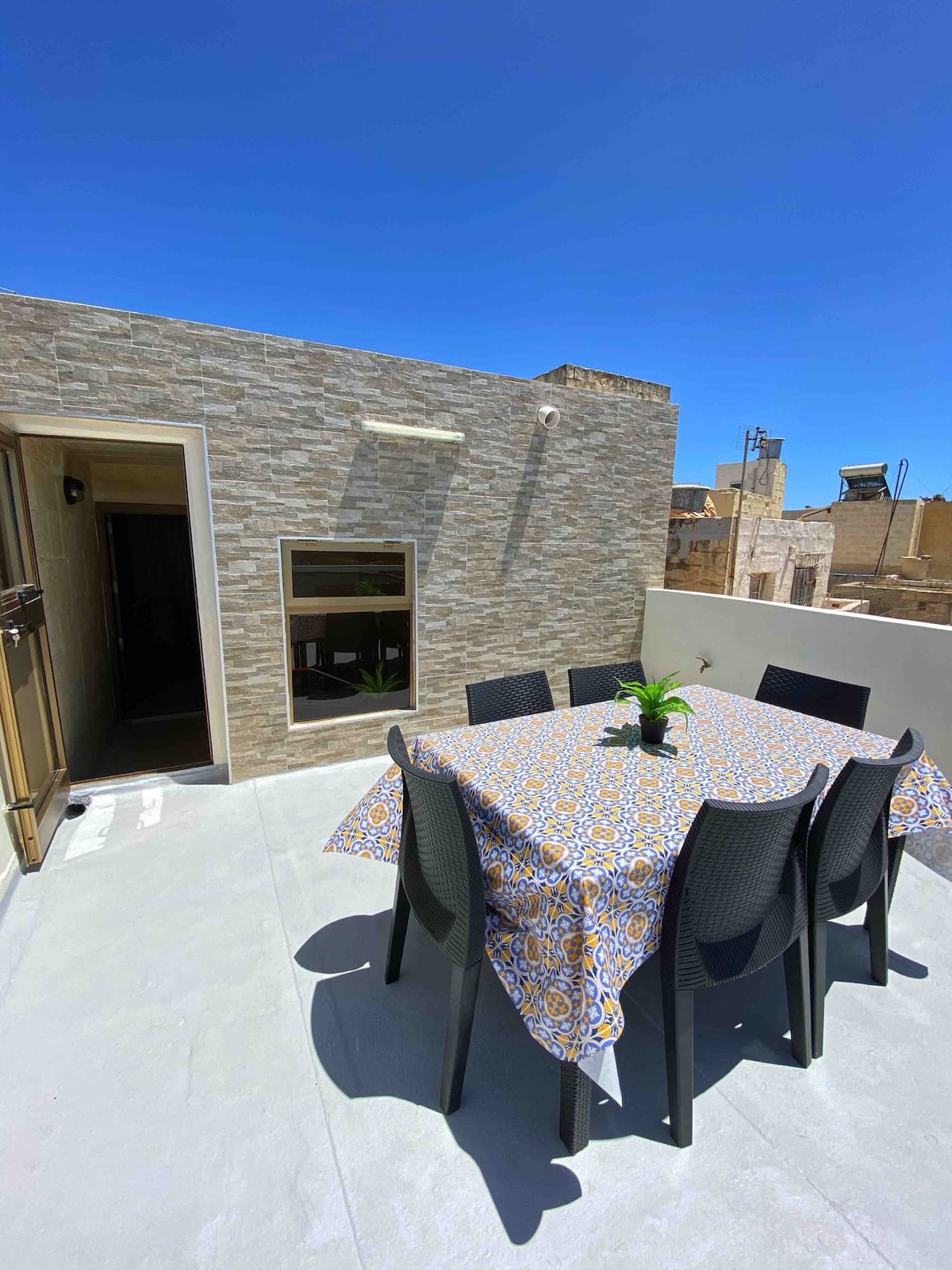
For a stay of that length, we'd argue a whole house beats a hotel room comprehensively. You want a full kitchen, because cooking with local produce is half the pleasure of a long stay and nobody wants restaurant meals thirty nights running. You want a washing machine, because packing for a month is miserable without one. You want separate rooms, so one person can take a video call while the other reads, and a spare bedroom that can serve as an office. Our townhouse has all of that across three bedrooms, plus a roof terrace for the sunny days, which in a Maltese winter is a genuine daily amenity rather than a luxury.
One honest note on heating: Maltese houses are built for summer, and indoors can feel cooler than the street on a sunny day. Our bedroom air-conditioning units double as heaters in winter; they're pay-per-use, metered, so you run them exactly as much as you choose and pay only for what you use. Base yourself somewhere walkable with good connections and you won't need a car at all; our guide to staying in Malta without a car explains how, and the airport is only about a 17-minute drive away at either end of the stay. If a slow month by the harbour appeals, check your dates with us early, because winter long-stay enquiries have grown every year.
The Honest Bits: Rain, Wind and Shorter Days
We'd rather you arrive prepared than surprised, so here's the unvarnished version. Winter is Malta's rainy season. The rain mostly comes in short, dramatic bursts rather than day-long drizzle, and streets can briefly run like streams before drying out again, but you should expect some wet days in any winter week. Wind is the bigger factor: when a northeasterly blows across the harbour it feels well below what the thermometer says, so a windproof layer earns its place in your bag more than an umbrella does.
Days are shorter too. Not northern-Europe short, but it's dark by early evening, so plan your walking and sightseeing for the daylight hours and your long dinners for after. The sea, to be clear, is not for swimming in winter; you'll see a few hardy locals taking their daily dip, and you're welcome to join them, but for most of us the water is strictly for looking at, which the Grand Harbour rewards handsomely.
Finally, some seasonal businesses reduce their hours or close: boat-trip operators, beach clubs, some restaurants in summer-resort areas. Check ahead before making a special journey anywhere that sounds seasonal. Pack layers, one properly warm jumper, a windproof jacket and shoes with decent grip, because polished limestone pavements are slippery when wet, and keep a couple of indoor plans, museums or a long lunch, in reserve for the rough days.
What Stays Open: The Harbour Towns Live All Year
Here's the single most useful winter decision you can make: base yourself somewhere that lives year-round. Malta's summer-resort strips exist for tourists, and in January parts of them feel shuttered and bleak. Valletta and the harbour towns are the opposite, because they're real communities first and destinations second. In Senglea in January the bakery queue is as long as ever, the band clubs are open, the church bells keep their schedule, the greengrocer's van does its rounds, and the men still fish off the waterfront whatever the weather.
The practical machinery of a visit keeps running too. Museums, cathedrals and the big sights operate all year. Buses run all year. The harbour ferry between the Three Cities and Valletta runs year-round, a crossing of roughly ten minutes, though a genuinely rough sea occasionally pauses it, in which case the bus fills the gap; the traditional dgħajsa water taxis, about five minutes across, similarly answer to the weather. Restaurants in the harbour towns mostly trade right through winter, some with reduced days, so it's worth a quick check before setting your heart on somewhere specific.
The rhythm of a winter day here settles quickly: coffee somewhere sheltered, a morning of walking or museums, a long lunch, the ferry across the water, and home before dark with something good for supper.
A Winter Base in Senglea
We'll finish with our own corner of the harbour, because we think it makes an unusually good winter base and we can tell you exactly why. Senglea is a fortified 16th-century city on a finger of land in the Grand Harbour, and our house is a traditional Maltese townhouse in its quiet streets: three bedrooms, two with double beds and one twin room with two single beds, sleeping six, with two and a half bathrooms, a full kitchen, a washing machine, and a roof terrace looking straight across the water to Valletta. On a sunny December morning, breakfast on that terrace is entirely realistic, and on New Year's Eve it's the best seat we know of.
Everything a winter day needs is on foot. Gardjola Gardens and its famous watchtower are under five minutes away, the waterfront and its restaurants five to seven, and the Valletta ferry landing about fifteen. In the interests of winter honesty: like most traditional townhouses here, the house has stone stairs (with hand railings) and no lift, so it isn't suitable for wheelchair users or anyone who struggles with stairs. Bedroom air conditioning doubles as heating and is pay-per-use, and free street parking is nearby, first come, first served, should you rent a car for a day or two.
If you're still comparing areas, our guide to where to stay in Malta lays out the options fairly. But if a winter of harbour light, Christmas lights, midnight fireworks over the water, or simply a slow, mild January appeals, send us your dates and we'll tell you honestly whether the house and the season are right for what you have in mind.
Frequently asked questions
Is Malta worth visiting in winter?
Yes, provided you come for the right things. Winter Malta is for sightseeing, walking, history and food rather than beaches: daytime temperatures are typically around 15–18°C, the big sights are uncrowded, the countryside is green, and flights and accommodation are at their most affordable. It suits anyone happy to swap swimming for culture and mild sunshine.
Does Malta have Christmas markets?
Yes. Christmas markets and festive villages have become a fixture in recent years, typically in and around Valletta, with stalls, food and family attractions, and Gozo is known for a walk-through Bethlehem village with live actors. Details and dates change from year to year and are announced each season, so check what's on for your travel dates before you go.
What happens in Malta on New Year's Eve?
Celebrations centre on Valletta, with open-air festivities and a midnight countdown, and fireworks go up around the Grand Harbour at midnight. Watching from the water's edge or a harbour-facing roof terrace in Senglea is spectacular. Restaurants across the harbour towns host New Year's Eve dinners and fill up well in advance, so book ahead.
Is Malta good for a long winter stay?
Very. The climate is mild, English is an official language, the low season is affordable, and the harbour towns stay fully alive year-round. For a stay of weeks rather than days, self-catering with a full kitchen and washing machine makes life far easier than a hotel room, and a walkable base with a ferry link to Valletta means you can manage happily without a car.
What should I pack for Malta in winter?
Layers rather than heavy winter kit: a warm jumper, a windproof jacket, and shoes with good grip, because limestone pavements get slippery in the rain. A compact umbrella helps, though wind often makes the jacket more useful. Rain tends to come in short bursts, so pack for changeable days rather than constant cold, and keep an indoor plan in reserve.
Is everything closed in Malta in winter?
No. Valletta and the harbour towns, including the Three Cities, live year-round: museums, churches, shops, buses and the harbour ferries all keep running, and most restaurants there trade through winter. The exceptions are seasonal businesses such as boat trips, beach clubs and some venues in summer-resort areas, which may reduce hours or close, so check ahead.