Short Lets in Malta: An Honest Guide to Holiday Rentals and Short-Term Stays
Search for short lets in Malta and you get two different worlds on one results page: holiday homes for a week by the sea, and furnished flats for people moving here to work. We host guests in our own townhouse in Senglea, on the Grand Harbour, and we spend a surprising amount of time untangling that confusion in enquiry emails. This is the guide we wish people could read first.
It covers what a short let actually means here, whether a holiday rental beats a hotel for your sort of trip, the questions worth asking any host before you commit, and where on the islands to look. We have tried to be straight about the downsides, including the ones that apply to our own house. If a self-catering stay is specifically what you are after, our guide to self-catering in Malta covers kitchens, shopping and cooking here in more detail.
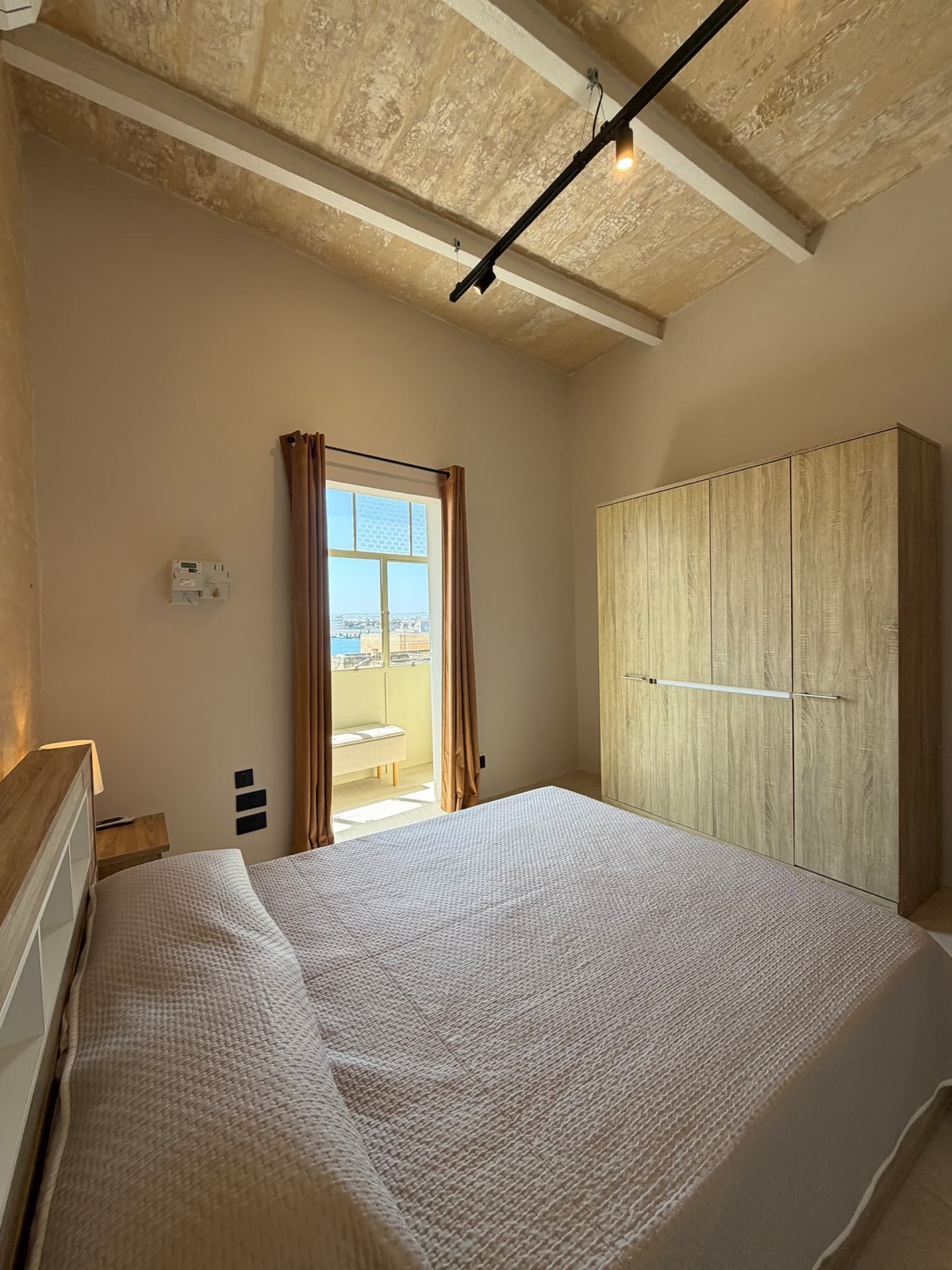
What a short let means in Malta
In Malta, "short let" is used loosely, and that is where the muddle starts. In everyday usage here, a short let is accommodation rented for anything from a couple of nights to a few months: a holiday home, a self-catering apartment, a townhouse like ours. A long let is a residential tenancy, typically a furnished flat on a lease of a year or more, aimed at people relocating for work or study. The two markets share the same words and often the same websites, which is why a search for "short term rental Malta" or "Malta apartments for rent short term" throws up estate agents next to holiday rentals.
The quick way to tell them apart: a holiday short let is fully equipped for guests who arrive with a suitcase and leave with it, with bedding, towels, kitchen basics, Wi-Fi and a host on the end of the phone. A long let is a property you move into, with a lease, a deposit and utility bills in your name. If you are coming to Malta for a holiday, a working break of a few weeks or a slow month in the sun, you want the first kind, and that is what this guide is about. If you are relocating for a year, you want an agent, not us.
"Holiday let", "holiday rental" and "holiday home" mean the same thing in practice. "Self-catering" describes the same places from the kitchen's point of view, which is why we have given it a guide of its own.
Is a hotel or a holiday rental better in Malta?
We are hosts, so you might expect us to say a holiday rental always wins. It does not; it depends on how you travel.
Where a short let genuinely wins is space and the ordinary business of living. A whole house or apartment gives you a kitchen, which means breakfast when you want it, a fridge for the tomatoes and cheese you bought at the market, and the option of a quiet night in. It gives you a washing machine, which changes how much you pack. It gives you separate rooms, so early risers and late sleepers can coexist, and it puts you in a real street rather than a lobby. In the Three Cities that means the bread van, neighbours on their doorsteps and church bells, which is most of why people come.
Where a hotel wins is service and simplicity. Nobody makes your bed in a short let, and nobody replaces the towels mid-week unless you have arranged it. There is no reception desk at midnight, only a host and a phone. Check-in is usually a lockbox or a key handover within set hours, which is less flexible than a 24-hour desk. And in the old towns, many of the most characterful houses, ours included, are built upwards, with stone stairs and no lift, charming on day one, a consideration on day seven. Newer hotels are generally the easier choice for anyone with limited mobility.
Our rule of thumb: for two people on a two-night city break, a good hotel is hard to beat. For a week or more, for families, for groups, or for anyone who likes to cook and potter, a short let tends to make the holiday better.
What to look for before you book a short let in Malta
Guests often ask about the requirements for a short let in Malta. For guests, there is nothing special to arrange; the legal requirements fall on the host, and licensing is the one worth asking about. Beyond that, listings are written to sell, so here is what we would check on any holiday rental in Malta, ours included.
- Licensing. Malta requires premises offered as holiday accommodation to be licensed by the Malta Tourism Authority (MTA). A licensed property should be able to give you its licence number on request, so ask, and check the current rules on the MTA's site before you book, as they can change. A host who dodges the question is telling you something.
- Whole property or a room? "Apartment" sometimes means a private room in a shared flat. Make sure the whole place is yours, and that the bedrooms are bedrooms rather than a sofa bed in the living room.
- Exact location and walking times. "Near Valletta" can mean a ferry ride or a motorway. Ask for walking times in minutes to the nearest bus stop, ferry, shop and restaurant, and look at the street on a map yourself. A good host has these numbers ready.
- Stairs and lifts. Older Maltese houses are built upwards. Ask how many flights there are to the bedrooms, whether there are hand railings and whether there is a lift. If anyone in your party struggles with stairs, ask this first.
- Air conditioning and heating. Ask which rooms have it, whether it is included or metered separately, and what heating exists in winter. Plenty of Maltese properties, ours among them, meter the air conditioning, and it is better to know in advance than to discover it on the bill.
- Parking. In old towns, "parking nearby" usually means free street parking, first come, first served, on streets that may be pedestrianised or one-way. If you are hiring a car, ask where you can stop to unload and how far you will carry the bags.
- What is provided. Linen and towels, yes; beyond that, ask. The kitchen and equipment questions, from ovens to detergent to a cot or high chair, are in our self-catering checklist. Ask them before the first evening, not after.
- Cancellation terms. Read them in full before paying and keep a copy; they vary enormously between hosts.
- Who you are dealing with. The owner, a local manager or a company running dozens of properties? None is automatically better, but know who answers the phone if the water goes off. Reviews that mention the host by name are a good sign.
Which is the nicest part of Malta to stay in?
People ask us which is the nicest part of Malta to stay in, and the truthful answer is that it depends what you want your evenings to look like. Where you base yourself matters more than which listing you pick, and the islands divide fairly cleanly.
Sliema and St Julian's have plenty of short-let apartments, a modern seafront and the nightlife, and the least old-Malta character. Valletta has handsome townhouses converted to holiday lets, steep stepped streets and daytime crowds. The north (Mellieħa, St Paul's Bay, Buġibba) has the sandy bays and works best with a car. Gozo is a slower, greener island of converted farmhouses, a ferry crossing away. Our own corner is the Three Cities of Senglea, Birgu and Cospicua, across the Grand Harbour from Valletta: quieter, more lived-in, roughly ten minutes from the capital by ferry, and in our biased view the best balance of character and access.
We weigh every area properly, with the trade-offs, in where to stay in Malta, and explain how the three harbour towns differ in where to stay in the Three Cities. There is no wrong answer, only a wrong fit.
Short lets for longer: a month in winter
A request we now receive regularly is for a month or more between November and March. Winter is the quiet season, so a whole house for a month is easier to find than it would be in summer, and it is the one case where the checklist above matters more, not less. A kitchen, a washing machine and a clear answer on how heating is charged stop being nice-to-haves. The location test becomes whether you could happily walk to coffee, bread, a ferry and a bus stop every day for thirty days.
What the season is actually like, who it suits, what stays open and why the harbour towns make a better January base than the resort strips is all in our guide to Malta in winter, so we will not repeat it here. If a longer winter stay appeals, send us your dates and we will tell you what is free.
Short lets for families and groups
For four to six people, the case for a short let over a hotel is at its strongest. You get one kitchen table, one living room and bedrooms a doorway apart, instead of three rooms down a corridor and nowhere to gather in the evening.
What to check is the sleeping arrangement in detail: how many real bedrooms, how many real beds, and whether "sleeps six" counts a sofa. Ask about a cot or high chair if you need one, and ask the stairs question early. We have gone into all of this, and why the calm of the Three Cities suits families so well, in our guide to Malta family and group accommodation.
Getting around from a short let without a car
One quiet advantage of a well-placed short let is that you can skip the hire car. Malta is small, the buses reach everywhere eventually, and from the harbour towns the ferry to Valletta is a crossing of roughly ten minutes, a dgħajsa water taxi about five. The narrow, often pedestrianised streets that make parking a chore in the old towns are exactly what make them a pleasure on foot.
The trick is to choose your base with transport in mind rather than as an afterthought. We have ranked the best car-free bases and explained the ferry, the buses and the airport transfer in our guide to staying in Malta without a car. The practical detail of routes and tickets is in getting around Malta by bus and ferry.
Our townhouse in Senglea
Having told you what to ask of any host, here are our own answers. Our house is a traditional Maltese townhouse in the quiet streets of Senglea, the fortified 16th-century city that juts into the Grand Harbour opposite Valletta. The city is old; the house is a well-kept family townhouse of the kind the Three Cities are full of, let whole, never by the room.
The house. Three bedrooms: two with double beds and one twin room with two single beds, so it sleeps six without anyone on a sofa. Two and a half bathrooms. A full kitchen with oven, gas hob, fridge and freezer, and a washing machine (we do not provide detergent, so bring or buy some). Free Wi-Fi. A roof terrace looking across the harbour to Valletta, the obvious place to be at sunset. There is no pool.
Heating and cooling. Air conditioning is in the bedrooms only and is metered, so you pay for what you use; it doubles as heating in winter. Fans are free.
Walking times. Gardjola Gardens and its watchtower under five minutes. The waterfront and its restaurants five to seven. The Valletta ferry landing about fifteen, for a crossing of roughly ten minutes. The airport is around a 17-minute drive.
Stairs, parking and the rest. Like most traditional townhouses here, the house has stone stairs with hand railings and no lift, so it is not suitable for wheelchair users or anyone who finds stairs difficult. Our street is pedestrianised; the nearest point a car can stop is about 70 metres away, and free street parking nearby is first come, first served. Self check-in by lockbox from 15:00, checkout before 10:00. No pets.
Who it suits. Couples and families who want a real neighbourhood and a harbour view rather than a resort; groups of up to six under one roof; car-free trips; slow winter months; people who like to cook. Who it does not suit: anyone who needs step-free access, wants a pool or a beach on the doorstep, or would rather have daily housekeeping and a front desk. We would rather you knew that now.
The house has a 4.86 average from 278 verified guest reviews, and we read every one. If it sounds like your sort of place, see the house, then check your dates with us and we will tell you straight whether it fits what you have in mind.
Frequently asked questions
What are the requirements for a short let in Malta?
For guests, there is nothing special to arrange for a short let in Malta; the requirements sit with the host. Malta requires premises offered as holiday accommodation to be licensed by the Malta Tourism Authority (MTA), and a licensed property should be able to give you its licence number on request. Ask for it, and check the current rules on the MTA's site before you book, because they can change.
Which is the nicest part of Malta to stay in?
The nicest part of Malta to stay in depends on the holiday you want. For history, harbour views and a sense of staying where people actually live, choose Valletta or the Three Cities (Senglea, Birgu and Cospicua); the Three Cities are the quieter of the two. For nightlife, shops and a modern seafront, Sliema and St Julian's. For beaches, the north or Gozo.
Is it better to stay in a hotel or an apartment in Malta?
In Malta, for a night or two, a hotel is simpler: daily housekeeping, a front desk and flexible check-in. For a week or more, for families or groups, or if you like to cook and settle in, a whole apartment or house gives you more space and a better sense of the place. The honest downsides of a short let are no daily cleaning, stairs in older houses and a fixed check-in arrangement.
What is the difference between a short let and a long let in Malta?
A short let is holiday accommodation for a few nights to a few months, furnished and equipped for guests, with the host handling keys, linen and utilities. A long let is a residential tenancy, usually a year or more, aimed at people relocating, with a lease, a deposit and bills in your name. The two get mixed up online, so check which market a listing belongs to before enquiring.
Do Maltese holiday rentals include air conditioning and heating?
Maltese holiday rentals do not always include air conditioning, and when they do it is not always in the price. Many properties have air conditioning in some rooms only, and a good number meter it separately so you pay for what you use; in winter the same units often serve as heating. Ask any host which rooms are covered, whether it is included and what heating exists before you book.
Can I rent a short let in Malta for a month or more?
Yes. Monthly holiday lets in Malta are common, and November to March, the quiet season, is when a whole house for a month is easiest to find. It is still a short let rather than a tenancy: the place comes furnished and equipped, and the host handles keys, linen and bills. Send a host your dates and they can confirm what is free.