Isla (Senglea): A Local Guide to Malta's Quiet Harbour Peninsula
Senglea — known to everyone here simply as Isla — is the slim finger of land that points into Malta's Grand Harbour, directly across the water from Valletta. It is the smallest and quietest of the Three Cities, alongside Birgu (Vittoriosa) and Cospicua (Bormla), and to our minds the most rewarding place in Malta to watch real harbour life go by. We live here, so this guide to Senglea, Malta covers what we would show a friend: the Gardjola Gardens and their famous watchtower, the marina and waterfront, what Isla is actually famous for, a little history, where to eat, and how to cross the water to Valletta.
Senglea or Isla — which is it?
Both, and locals use them interchangeably. Isla (from the Italian isola, island) is the town's everyday Maltese name — a nod to the way the fortified peninsula juts into the Grand Harbour, almost surrounded by water. Senglea is the formal name, honouring Claude de la Sengle, the Grand Master of the Knights of St John under whom the town was fortified in the 1550s. Road signs, buses and maps may show either — you will see "Senglea", "Isla", "L-Isla" and even "Senglea (Isla)" used for exactly the same place — and the parish proudly adds a third name: Città Invicta, the unconquered city, earned in the Great Siege of 1565. So if you have been searching for Isla, Malta and wondering whether it is the same town as Senglea: yes, it is, and you are in exactly the right place.
What is Isla (Senglea) famous for?
Ask a Maltese person what Isla is known for and you will usually get the same handful of answers:
- The vedette in the Gardjola Gardens — the little stone watchtower carved with an eye and an ear, keeping symbolic watch over the harbour mouth. It is one of the most photographed spots in the country and the image you have almost certainly seen on postcards of Malta.
- The title Città Invicta. Senglea never fell during the Great Siege of 1565, and the "Unconquered City" title it earned then is still a point of real local pride.
- The best views of Valletta. Because Isla faces the capital head-on across the Grand Harbour, the panorama from its bastions is arguably finer than any view you get from Valletta itself.
- The festa of Maria Bambina. On 8 September the town celebrates the Nativity of Our Lady — the same day Malta marks Victory Day — and the traditional rowing regatta in the Grand Harbour is fiercely contested, with Senglea's crews among the proudest in the sport. If your visit coincides, it is a wonderful window into Maltese life.
- A working, lived-in harbour town. Unlike some prettified spots, Isla is still a real neighbourhood: washing strung between balconies, boat repairs on the quay, and neighbours chatting on doorsteps.
A short history of Senglea, Malta
The peninsula was largely open ground — used for hunting and known as the island of St Julian — until the Knights of St John arrived in Malta in 1530 and began fortifying the harbour. Fort St Michael rose at the landward end, and in the 1550s Grand Master Claude de la Sengle laid out a new fortified town on the promontory, which took his name. Locals, though, have always called it Isla, "the island", for its near-surrounded position in the water.
Its defining moment came almost immediately. During the Great Siege of 1565 the Ottoman forces threw wave after wave at Fort St Michael and the Senglea bastions, and the peninsula held. The town's formal title, Città Invicta — the Unconquered City — dates from those months, and you will still see it on the parish crest today.
In the British era Senglea became a dense, hard-working dockyard town, home to shipwrights, stevedores and their families, and one of the most crowded square miles in Europe. That closeness to the dockyards proved devastating in the Second World War: the harbour area was bombed relentlessly, and Senglea suffered some of the worst destruction in Malta, losing much of its historic fabric and, for a time, most of its population. Yet the street plan survived, the town was rebuilt, and walking the grid of steep, washing-strung lanes today still gives a vivid sense of how tightly packed and resilient this maritime community has always been. Restoration over recent decades has brought back much of its quiet dignity, and it remains far less crowded than Valletta or Birgu — which, for visitors, is precisely its charm.
Gardjola Gardens and the famous vedette
If you do one thing in Senglea, make it the walk to the very tip of the peninsula, where the Gardjola Gardens (Il-Ġnien tal-Gardjola) sit on the old bastion. These compact, shaded gardens are crowned by the vedette, a small stone watchtower carved with an eye, an ear and a crane (a bird). These were symbols of vigilance, reminders that the sentry on duty was always watching and listening over the harbour mouth. It is one of the most photographed spots in Malta, and deservedly so.
From the bastion wall the panorama is extraordinary: Valletta and its fortifications directly opposite, Fort St Angelo to your right above Birgu, and the full sweep of the Grand Harbour between. It is a wonderful place at any hour, but the light is loveliest in the late afternoon and at sunset, when the honey-coloured stone of Valletta glows across the water. The gardens are free to enter and rarely busy.
The marina and waterfront
Down at sea level, the Senglea waterfront curls around the inner creek shared with Birgu, where a modern marina is lined with yachts and traditional Maltese boats. The painted luzzu fishing boats, with their bright hulls and the protective Eye of Osiris on the bow, are a reminder that this is still a living harbour. A gentle stroll along the quay, with the bastions of Senglea rising on one side and Birgu opposite, is one of the most relaxing things you can do in the Three Cities.
From the waterfront you can also pick up a traditional dgħajsa water taxi, the slim harbour boat that has ferried people across these creeks for generations. They run on demand rather than to a timetable, departing once a few passengers have boarded, and you pay the boatman directly in cash, usually around €3 per person for a crossing (it is worth confirming the price before you set off). Many boatmen will also take you on a short harbour tour of the creeks for roughly €8 per person, arranged on the spot. It is a memorable, low-key way to see the harbour from the water.
Things to do in Senglea (Isla)
Senglea rewards slow wandering more than ticking off attractions, but there is plenty to anchor a half-day visit:
- Walk the bastions and the Gardjola Gardens for the best harbour views in Malta, then follow the fortification walls back into town.
- Step inside the Senglea Basilica, dedicated to the Nativity of Our Lady and rebuilt after wartime destruction. It is the spiritual heart of the town, home to the much-venerated statue of Maria Bambina and the statue of Christ the Redeemer (Ir-Redentur), which draws pilgrims from across Malta.
- Get lost in the back streets, where steep stepped alleys, carved corner niches of saints and traditional Maltese balconies make every turn photogenic.
- Watch harbour life from the marina — luzzu boats, dgħajjes and the slow theatre of the creek — ideally with a coffee or a cold Cisk in hand.
- Time your visit for 8 September if you can, when the Maria Bambina festa fills the streets and the Grand Harbour regatta races practically past the front door.
- Cross to Birgu (Vittoriosa), a few minutes around the creek — our guide to the best things to do in Birgu (Vittoriosa) covers it properly. The Inquisitor's Palace there is open daily, roughly 9:00 to 17:00 with last admission around 16:30, and adult tickets are about €6 — do check Heritage Malta for current hours and prices. Note that the Malta Maritime Museum nearby has been under a long restoration; for now only its "An Island at the Crossroads" exhibition is open to visitors, so confirm what is accessible before you go.
For a wider view of all three towns and how they fit together, our 3 Cities guide is a good companion to this one.
Where to eat and drink in Senglea
Senglea is small, so for the widest choice many visitors combine a meal with a wander along the shared creek towards Birgu. On the Senglea side itself, the marina has a handful of welcoming spots: Marina Restaurant offers open-air Mediterranean dining right on the waterfront, while Enchanté is a good choice for seafood by the marina. Il-Pirata is a more local option in the town if you would rather eat among residents than tourists — and honestly, some of our favourite evenings involve nothing fancier than a pastizz from a corner shop eaten on the bastion wall.
Just across the water on the Birgu waterfront you will find more options worth the short walk, including Terrone, known for Mediterranean seafood, and the more casual Don Berto. Wherever you choose, aim for a table facing the water and time it for the early evening, when the harbour light is at its best. Menus and opening days change seasonally — several places close one day a week, typically early in the week — so it is sensible to book ahead in summer and to check opening days in winter.
Getting to Valletta from Senglea
The most enjoyable way to reach the capital is by harbour ferry. The Valletta Ferry Service crosses the Grand Harbour from the Cottonera (Three Cities) landing near Cospicua to Lascaris Wharf in Valletta in around ten minutes, with departures roughly every half hour. Current fares on the operator's site are about €3.00 for an adult single and around €5.00 for a day return, with reduced child fares and a slightly higher night tariff after 19:30; a return ticket also includes same-day use of the Barrakka Lift up into Valletta. Times vary by season and on Sundays, so check the latest schedule on Valletta Ferry Services before you travel. We cover routes, fares and timetables in detail in our Senglea to Valletta ferry guide.
If you prefer the bus, routes 1, 2, 3 and 4 link the Three Cities to the Valletta terminus just outside the city gate, with Senglea served mainly by route 1. Single fares are around €2.00 in winter and €2.50 in summer, and every ticket allows free transfers within two hours. The traditional dgħajsa water taxi described above is a third, more scenic option across to the Valletta waterfront.
Getting to Senglea and around the Three Cities
Coming the other way is just as easy, and you genuinely do not need a car for Isla. From Valletta, the harbour ferry followed by a pleasant fifteen-minute waterfront walk is the nicest arrival; buses from the Valletta terminus drop you at the edge of town; and a taxi or ride-hailing app will get you to the head of the peninsula, though not far into it — much of old Senglea is narrow, one-way or pedestrianised, which is exactly why it has kept its character. If you do drive, there is free street parking around the fringes of the town, first come, first served, and it fills up in the evenings.
Once you are here, everything is on foot: the walk around the creek from Senglea's marina to Birgu's waterfront takes only a few minutes, and Cospicua joins the two at the head of the creeks. You can comfortably string all three towns together in a single unhurried day. For the bigger picture on buses, ferries and moving between towns across the island, see our guide to getting around Malta by bus and ferry.
Planning your visit to Senglea
Senglea makes an easy half-day on its own — a couple of hours covers the Gardjola Gardens, the basilica and the waterfront at a gentle pace — but it pairs naturally with Birgu for a full Three Cities day, and it truly shines as a base for exploring the whole harbour at a calmer rhythm than central Valletta. Mornings and late afternoons are loveliest for photographs; the middle of a summer's day is best spent over a long waterfront lunch. Spring and autumn are typically the most comfortable seasons for wandering the stepped lanes, and even winter here is usually mild — our guide to the best time to visit Malta goes month by month.
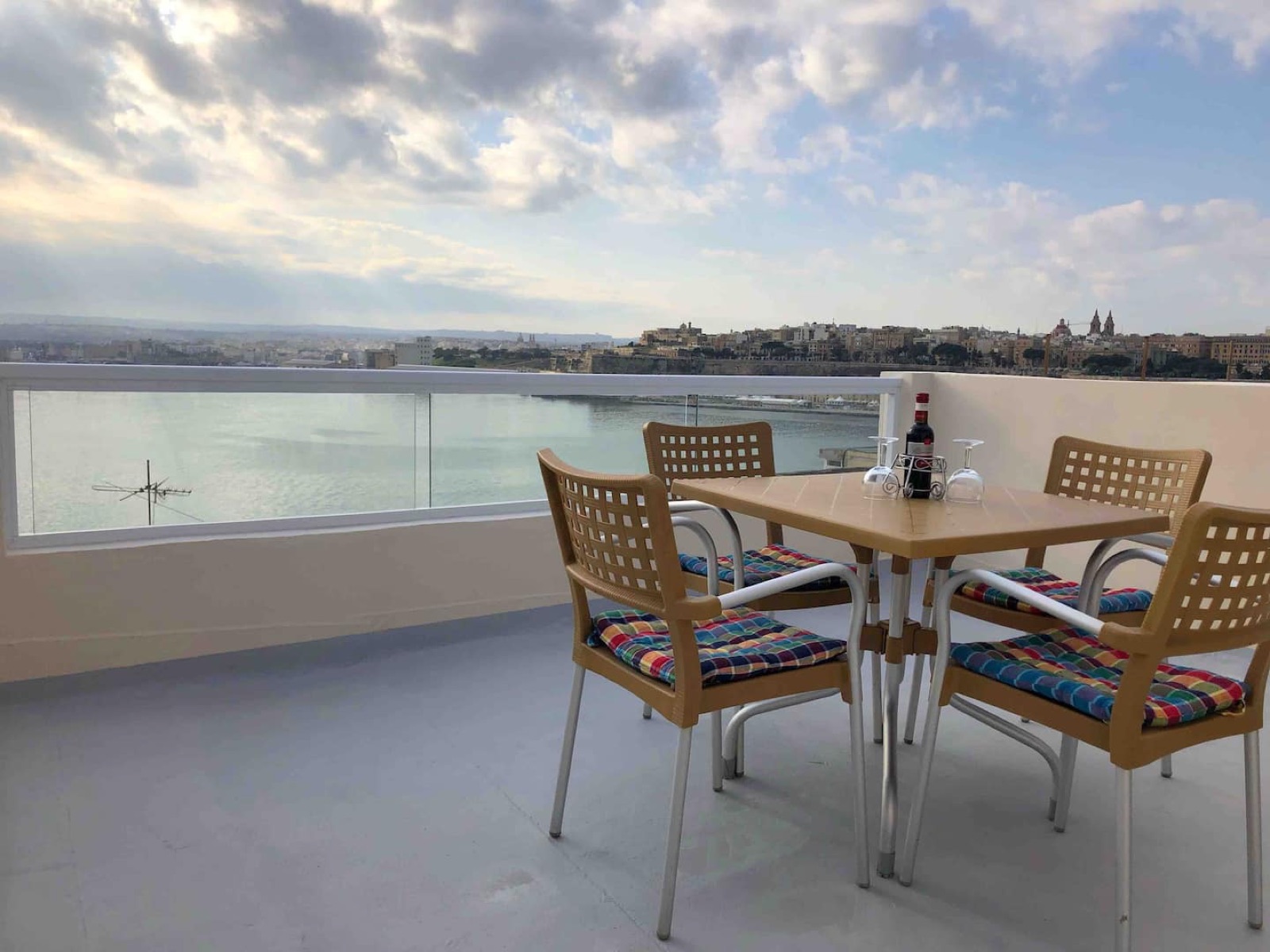
If you would like to stay in the middle of it all, our own restored townhouse, Senglea Harbour View, sits within the old town — under 5 minutes' walk from the Gardjola Gardens, 5–7 minutes from the waterfront restaurants, and a solid 15 minutes' walk from the Valletta ferry. It is a traditional three-storey house with stone stairs and no lift, so it suits travellers happy on their feet; the roof terrace looks straight out over the Grand Harbour. You are welcome to get in touch with any questions about visiting the area, whether or not you stay with us.
Frequently asked questions
Is Isla the same as Senglea in Malta?
Yes — Isla and Senglea are two names for the same town. Isla is the everyday Maltese name, from the Italian isola (island), while Senglea honours Grand Master Claude de la Sengle, who fortified it in the 1550s. It is one of Malta's Three Cities on the Grand Harbour, directly opposite Valletta.
What is Senglea best known for?
Senglea, or Isla, is best known for the Gardjola Gardens at the tip of the peninsula, crowned by a carved stone watchtower (the vedette) and offering some of the finest views of Valletta and the Grand Harbour in Malta. It is also one of the Three Cities, earned the title Città Invicta (the Unconquered City) in the Great Siege of 1565, and celebrates the famous Maria Bambina festa and harbour regatta on 8 September.
Where is Senglea in Malta?
Senglea (Isla) sits on a narrow fortified peninsula in the Grand Harbour, on the opposite shore from Valletta, in the south-east of Malta. It is one of the Three Cities, alongside Birgu (Vittoriosa) and Cospicua (Bormla), and is about ten minutes from Valletta by harbour ferry.
What is there to do in Senglea, Malta?
The highlights are the Gardjola Gardens and their carved watchtower (the vedette) at the tip of the peninsula, the waterfront marina and its restaurants, the Senglea Basilica with its Maria Bambina and Redeemer statues, wandering the stepped back streets, and a short ferry or traditional dgħajsa water-taxi crossing of the Grand Harbour to Valletta. Birgu's museums are a few minutes' walk around the creek.
Is Senglea worth visiting?
Yes. Senglea is quieter than Valletta and Birgu but offers wonderful harbour views from the Gardjola Gardens, an atmospheric grid of stepped lanes, a working marina with traditional Maltese boats, and good waterfront dining. It pairs naturally with a visit to the other Three Cities and makes a relaxed half-day trip or a calm base for exploring the harbour.
How do you get from Senglea to Valletta?
The most scenic route is the harbour ferry, which crosses from the Cottonera (Three Cities) landing to Valletta's Lascaris Wharf in about ten minutes, roughly every half hour, for around €3 single or €5 day return. You can also take bus route 1 towards Valletta, or hire a traditional dgħajsa water taxi from the waterfront. Check the latest ferry schedule before travelling, as times change seasonally.
What does the carving on the Senglea watchtower mean?
The vedette in the Gardjola Gardens is carved with an eye, an ear and a crane. These were symbols of vigilance, signifying that the sentry on watch over the harbour mouth was always seeing and listening for any threat. It dates from the era of the Knights of St John and is one of Malta's most photographed landmarks.
What is the other name for Senglea?
Senglea is also known as Isla (or L-Isla in Maltese); the two names are used interchangeably on maps, buses and road signs. It also carries the historic title Città Invicta — the Unconquered City — for withstanding the Great Siege of 1565.
Is Senglea a walkable city?
Yes, very. Senglea is a small, compact peninsula best explored on foot. The streets are narrow and partly pedestrianised, and you can walk from one end to the other — down to the waterfront and out to the Gardjola Gardens — in well under 15 minutes. Expect steps and slopes, as the town is built on a ridge.