Where to Stay in Malta: The Best Places & Areas, Honestly Compared
Malta is small — you can drive from one end to the other in under an hour — but where you base yourself shapes your whole trip. The island packs beach resorts, a baroque capital, sleepy fishing creeks and a near-empty sister island into a space the size of a city. We live and host on the Grand Harbour, so we have watched plenty of first-time visitors realise, a day too late, that they booked the wrong neighbourhood for the holiday they actually wanted. This guide walks through the main areas honestly — who each one suits, what you trade away, and how easy it is to reach the airport and the sights — so you can choose with open eyes.
How to think about choosing a base in Malta
Because Malta is so compact, you do not need to stay next to every attraction — you need to stay somewhere that matches your pace. Ask yourself three questions. First, do you want nightlife and a buzz on your doorstep, or quiet evenings? Second, do you want a beach within walking distance, or are you happy to travel to the water? Third, how much do you care about character and history versus convenience and choice?
Practical logistics are reassuringly simple wherever you land. Malta International Airport at Luqa sits in the middle of the island, so most areas are a 15–30 minute drive away. Public buses are cheap — a single day-route ticket is around €2.00 in winter and €2.50 in summer, valid for two hours with free transfers — and an Explore 7-day card at €25 covers unlimited bus travel if you plan to ride often. The catch is that almost every route funnels through Valletta or the Marsa interchange, so cross-island journeys can be slow even when the distance is short. Renting a car gives you freedom; not renting one means leaning on buses, the occasional ferry, and ride-hailing apps such as Bolt and eCabs, which both operate across the island.
Sliema and Gżira: the convenient all-rounder
Sliema is where most first-time visitors end up, and for good reason. It is the island's shopping and seafront-promenade hub, packed with hotels, self-catering apartments, cafes and rock-and-lido swimming spots along the Qui-si-Sana and Tigné stretches. The neighbouring Gżira and Tas-Sliema waterfronts continue the same easy, walkable strip. From Sliema you can catch a passenger ferry straight across Marsamxett Harbour to Valletta in minutes, which makes day trips effortless.
Who it suits: first-timers, families who want shops and services close by, and anyone who values convenience over deep character. The trade-off: Sliema is modern and built-up rather than historic, the "beaches" are mostly flat rock and concrete lidos rather than sand, and prices skew higher. If you want Malta's soul, you will be travelling to find it.
St Julian's and Paceville: nightlife central
A short walk north of Sliema, St Julian's wraps around the pretty Spinola Bay and then ramps up into Paceville, Malta's undisputed nightlife district — clubs, bars, casinos and late-night crowds. There are some excellent restaurants around Spinola and Portomaso, and the marina setting is genuinely attractive by day.
Who it suits: younger travellers, stag and hen groups, and night owls who want to roll home from a club. The trade-off: Paceville is loud well into the small hours, and that noise carries. If you are not there for the parties, book on the quieter Spinola or Balluta side, or choose another area entirely. Families and light sleepers should think twice.
Valletta: history on your doorstep
Malta's UNESCO-listed capital is a living baroque museum — golden limestone palazzos, St John's Co-Cathedral, the Upper Barrakka Gardens and a skyline of domes and bastions. Staying inside the city walls means stepping out of your door into the history, with superb restaurants and wine bars tucked down the grid of narrow streets.
Who it suits: culture lovers, couples and anyone who wants atmosphere over beaches. The trade-off: Valletta is hilly and stepped, parking is genuinely difficult, accommodation is limited and often pricey, and the city quietens considerably once the day-trippers leave — which some love and others find a touch sleepy. There is no beach; swimming means travelling out.
Mdina and Rabat: the silent city and the countryside
Inland and uphill, the fortified old capital of Mdina — the "Silent City" — and its surrounding town of Rabat offer the most romantic, hushed corners of Malta. Mdina has only a handful of residents and almost no traffic, so evenings inside the walls are extraordinarily peaceful. Rabat adds the catacombs, good local restaurants and easier parking.
Who it suits: couples, photographers and travellers chasing quiet and history away from the coast. The trade-off: you are in the centre of the island with no sea and limited nightlife or shopping, so you will rely on a car or buses to reach the coast and the airport. It is a base for slowing down, not for buzz.
Gozo: the slow-travel escape
Malta's greener, sleepier sister island is a 25-minute ferry hop from the north of the main island. Gozo is rural and unhurried — think the citadel of Victoria, the dramatic cliffs at Dwejra, the diving at the Blue Hole and a string of farmhouse stays with private pools. It feels a decade behind the pace of Sliema, in the best way.
Who it suits: divers, walkers, couples seeking seclusion and anyone wanting genuine rural calm. The trade-off: getting anywhere on the main island, including the airport, means factoring in the ferry crossing and the drive to and from the terminal, so Gozo works best as its own self-contained holiday rather than a base for exploring everything.
The Three Cities: authentic, quiet and right on the harbour
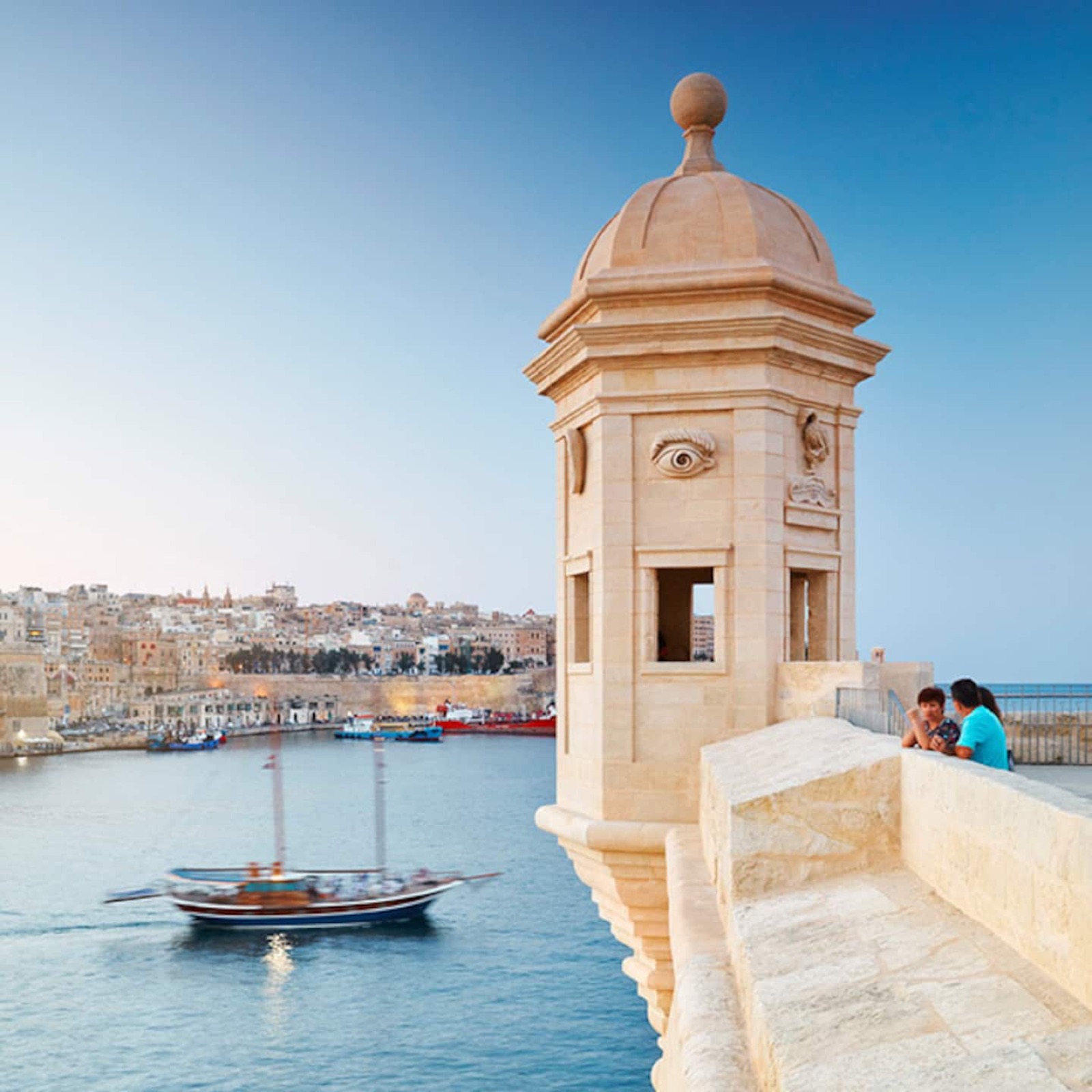
Across the Grand Harbour from Valletta lie the Three Cities — Senglea (Isla), Birgu (Vittoriosa) and Cospicua (Bormla) — the historic heart of maritime Malta and, in our view, its most rewarding place to stay. This is where the Knights of St John first settled, and the area still feels lived-in and local rather than packaged for tourists. You wake to fishing boats and church bells, eat where Maltese families eat, and watch the sun set over Valletta's bastions from the water's edge.
The setting is the headline. The Birgu and Senglea waterfronts face each other across a yacht-filled creek, with restaurants such as Terrone and Don Berto on the Birgu side and Marina Restaurant and Enchanté along the Senglea marina. Birgu is home to Heritage Malta sites including the Inquisitor's Palace (open daily, roughly 9:00–17:00 with last admission around 16:30, adult tickets about €6); note that the Malta Maritime Museum is still under major restoration, with only its An Island at the Crossroads exhibition currently open, so check Heritage Malta's website before you go.
Getting to Valletta is a pleasure rather than a chore. The Valletta Ferry crosses the Grand Harbour from the Cottonera waterfront to Lascaris Wharf in around 10 minutes, running roughly every half hour; expect to pay in the region of €3 for an adult single and about €5 for a day return (a return also includes same-day use of the Barrakka Lift). For more romance, a traditional dgĥajsa water taxi makes the short hop on demand for around €3 per person, cash to the boatman. Buses 1, 2, 3 and 4 also connect the Three Cities to Valletta, and for the airport the cleanest route is changing at Paola onto route 88 — though many visitors simply ferry to Valletta and connect from there. The trade-off: there is no sandy beach on the doorstep and nightlife is low-key, so party-seekers should look to St Julian's. But if you want Malta as the Maltese live it — quiet, characterful and on the water — this is it. Our own home, Senglea Harbour View, sits in exactly this setting, a 15-minute walk from the Valletta ferry; if you would like to stay in the Three Cities you are welcome to get in touch. For a fuller picture of the area, see our guide to staying in the Three Cities.
And if you’re planning to skip the hire car entirely, our guide to where to stay in Malta without a car makes the case in full.
Where to stay in Malta for the first time
For a first visit, stay somewhere that makes the whole island easy: you'll want Valletta within easy reach, a ferry or bus hub nearby, and evenings that feel Maltese rather than resort-generic. Sliema does the job if you like a promenade and plenty of restaurants; Valletta itself is wonderful but busy and pricier; the Three Cities give you the same harbour, a quieter street outside your door, and a five-minute ferry into the capital. First-timers often assume they need to be "central" — but Malta is so small that well-connected matters far more than in the middle.
Where to stay in Malta for couples
Couples tend to want atmosphere: golden limestone, quiet lanes, a view over dinner. Valletta and the Three Cities are the romantic picks — sunset over the Grand Harbour beats a hotel pool bar every time. A traditional townhouse with a roof terrace gives you that view to yourselves; add a dgħajsa (traditional water taxi) ride across the harbour and you have the postcard evening without a tour group in sight. St Julian's is better saved for couples whose idea of romance includes cocktails and clubs.
Where to stay in Malta for older couples
We host plenty of couples in their sixties and seventies, and the quiet historic harbour towns suit them especially well. The pace is the draw: unhurried lunches, locals chatting on doorsteps, and evenings that end with a stroll along the marina rather than a queue outside a bar. The waterfront walks in Senglea and Birgu are flat and level, so you can potter beside the water for an hour without tackling a hill, and the harbour ferry spares you the buses — the crossing to Valletta takes roughly ten minutes and lands you near the lift up to the Barrakka Gardens.
One honest note about traditional townhouses, ours included: Maltese houses of character are built vertically. Our home has traditional stone stairs with hand railings and no lift, so it suits couples who are steady on their feet; if stairs are a real struggle, a hotel with a lift in Valletta or Sliema will serve you better. Valletta itself is hilly and stepped, and Mdina leaves you far from the sea, so weigh the ground as well as the view. If a quiet harbour town sounds like your kind of Malta, our Senglea guide shows what daily life here looks like, and you are welcome to send us your dates.
Where to stay in Malta for beaches
Honest answer: Malta's best sandy beaches — Mellieħa Bay, Golden Bay, Għajn Tuffieħa — are in the north-west, so if a towel-on-sand holiday is the whole point, stay up north. But if beaches are one ingredient among many, base yourself around the harbour and treat beach days as easy outings: buses run north from the capital, and much of Maltese swimming is actually rocky-lido style right off the coast road. The Three Cities have their own swimming spots along the harbour in summer, and you keep history, restaurants and the ferry on your doorstep for the days you're not swimming.
Where to stay in Malta for nightlife
That's Paceville and St Julian's — clubs, bars and crowds until the small hours, with Sliema as the slightly calmer neighbour. Stay there if that's the plan; just know it's the least Maltese-feeling corner of the island. If you want the occasional big night out but quiet sleep, base yourself elsewhere and taxi back — Malta is small enough that nowhere is far. The Three Cities are the opposite of Paceville: waterfront wine bars, locals strolling after dinner, and silence by midnight.
Where to stay in Malta with family
Families do best with space, a kitchen, and somewhere safe to wander in the evening — which usually means an apartment or house rather than a hotel room. Mellieħa suits beach-first families; the harbour towns suit families who want castles, boats and ice-cream walks. The Three Cities are surprisingly good with children: the fortifications and waterfront feel like an adventure playground made of history, and the ferry ride to Valletta is a highlight in itself. We've written a fuller guide to family and group stays.
When are you going? A quick word on seasons
Where to stay changes a little with when you go. In July and August the resort strips are at their busiest and hottest, and anywhere with a pool or a swimmable shoreline earns its keep. From October through February the island quietens beautifully — sightseeing weather, low prices, and the harbour towns come into their own while beach resorts can feel half-asleep. We've put together a full month-by-month guide to visiting Malta if you're still choosing dates.
Which month are you coming? A quick answer
Winter (November to February): base yourself somewhere that lives year-round. Valletta, Sliema and the Three Cities keep their restaurants, ferries and everyday bustle going through winter, while the northern beach resorts partly wind down. Daytime is typically around 15–18°C, comfortable sightseeing weather, and the harbour towns are at their most local. We cover this season properly in our Malta in winter guide.
Shoulder months (March to May, and October): the easiest time to choose, because everywhere works. The sea is warm enough for swimming from late spring and usually well into October, the walking weather is excellent, and prices are gentler than in midsummer. Pick on character rather than season: the harbour towns for history, the north-west if sandy beaches top your list.
Summer (June to September): heat and crowds change the calculus. If you plan to swim every day, stay near water you like, whether that is the sandy north-west or a harbour base with rocky swimming spots close by. July and August are peak season in Sliema and St Julian's, while the Three Cities stay noticeably calmer, and evenings by the water are the reward. Still weighing up dates? Our month-by-month guide breaks the whole year down.
At a glance: which area suits you?
| Area | Best for | Vibe | Beach nearby? |
|---|---|---|---|
| Sliema / Gżira | First-timers, convenience, families | Modern, busy, walkable | Rock lidos, no sand |
| St Julian's / Paceville | Nightlife, young travellers | Loud, lively | Small bays only |
| Valletta | Culture, couples, food | Historic, atmospheric | No |
| Mdina / Rabat | Quiet, romance, photography | Silent, inland | No |
| Gozo | Diving, walking, seclusion | Rural, slow | Yes (varied) |
| Three Cities | Authenticity, harbour views, value | Quiet, local, historic | No (swim from rocks/lidos nearby) |
There is no single "best" area — only the best fit for your trip. Want shops and a promenade? Sliema. A big night out? St Julian's. Baroque grandeur? Valletta. Stillness? Mdina or Gozo. And if you want the real, lived-in Malta on the edge of the Grand Harbour, the Three Cities reward you every morning you wake up there. Whichever you choose, confirm current ferry times, bus routes and museum hours close to your travel dates, as seasonal schedules shift.
Frequently asked questions
What is the best area to stay in Malta for first-time visitors?
Sliema is the easiest all-rounder for first-timers: it has the widest choice of hotels and apartments, a long seafront promenade, plenty of shops and restaurants, and a quick passenger ferry to Valletta. If you would rather have history and character than convenience, Valletta or the Three Cities are excellent alternatives, while St Julian's suits those who want nightlife close by.
Where should I stay in Malta to avoid the crowds and nightlife?
For quiet, look to the Three Cities (Senglea, Birgu and Cospicua) on the Grand Harbour, the inland "Silent City" of Mdina with neighbouring Rabat, or the rural calm of Gozo. All three are peaceful in the evenings and far less built-up than Sliema or St Julian's, though none has nightlife or a sandy beach on the doorstep.
How do you get from Malta Airport to the Three Cities?
It is a short hop of roughly 6.5–7 km, about 15–25 minutes by road allowing for traffic. The simplest option is the official prepaid white taxi from the booth in arrivals (indicative fares are in the region of €16–27 depending on the exact town). Ride-hailing apps such as Bolt and eCabs are often cheaper off-peak, and pre-booked private transfers start from around €29. There is no single direct bus, but you can ride to Valletta or Paola and connect from there.
Is it easy to get from the Three Cities to Valletta?
Yes. The Valletta Ferry crosses the Grand Harbour from the Cottonera waterfront to Lascaris Wharf in around 10 minutes, running roughly every half hour, for about €3 a single or €5 a day return (which also covers the Barrakka Lift the same day). A traditional dgħajsa water taxi makes the crossing on demand for around €3 per person, and buses 1, 2, 3 and 4 also run into Valletta. Always check the latest times before you travel.
Should I stay in Malta or Gozo?
Stay on the main island of Malta if you want to combine history, dining, beaches and easy day trips, since most attractions and the airport are close by. Choose Gozo if you are after a slower, rural escape with diving, cliff walks and farmhouse stays, and are happy to treat it as a self-contained holiday — reaching the main island means factoring in the 25-minute ferry crossing each way.
Where should couples stay in Malta?
Valletta or the Three Cities for atmosphere and harbour views — quiet golden-stone streets, sunset over the Grand Harbour and good restaurants. Choose St Julian's only if nightlife is part of the plan.
Where is best to stay in Malta for beaches?
The north-west (Mellieha Bay, Golden Bay) has the best sand, so beach-first holidays should base there. If beaches are just one part of the trip, stay around the harbour and reach them by bus — Malta is small enough for easy beach days.
Can I stay in Malta without a car?
Yes — most visitors don't need one. Base yourself near a ferry or bus hub (Valletta, Sliema or the Three Cities) and the island opens up by bus, harbour ferry and water taxi. We cover this in detail in our car-free guide.
Where is the best place to stay in Malta?
There is no single best place, only the best fit for your trip. Valletta puts baroque history on your doorstep but is pricey, hilly and has no beach; Sliema is the convenient, well-connected all-rounder at the cost of character; and the Three Cities give you the same Grand Harbour with quieter, more local streets and a roughly ten-minute ferry to the capital.
What is the best area to stay in Malta without a car?
Valletta, Sliema and the Three Cities are the easiest car-free bases, because harbour ferries, water taxis and the main bus routes all converge on them. From the Three Cities, the ferry to Valletta takes around ten minutes and buses cover the rest of the island. We have written a full guide to staying in Malta without a car if you want the detail.