The Three Cities of Malta Explained
Across the Grand Harbour from Valletta sit three fortified towns that most visitors glimpse from a viewpoint and never quite reach. The Three Cities of Malta — Senglea, Birgu and Cospicua, known collectively as Cottonera — are older than Valletta itself, steeped in the story of the Knights of St John, and far quieter than the island's better-known sights. We live in Senglea, so this is our home ground. In this guide we explain what the Three Cities (or 3 Cities — you'll see both) actually are, the history that shaped them, what to see in each one, which to visit first, and exactly how to get here.
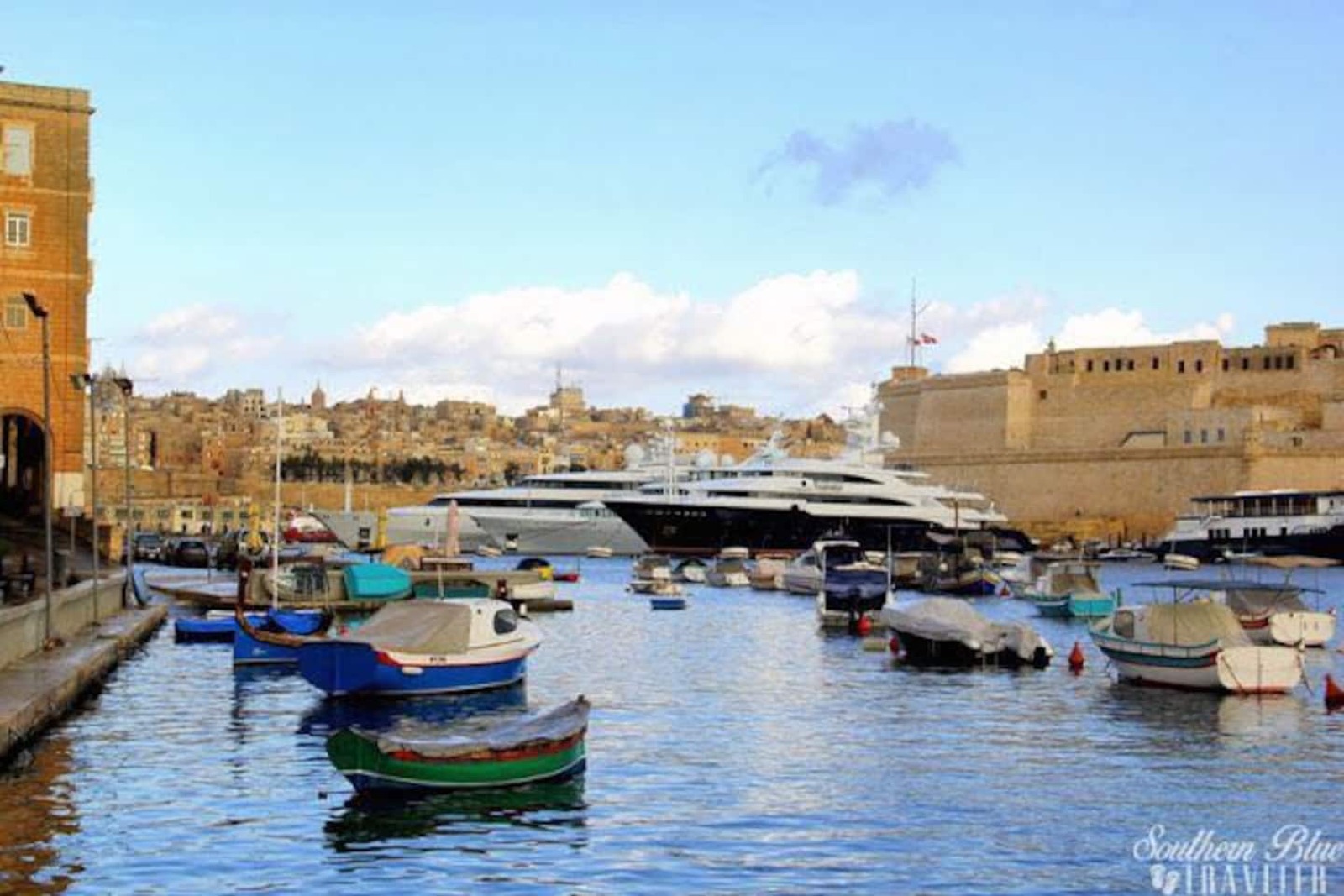
What Are the Three Cities of Malta?
The Three Cities are three adjoining fortified towns on the southern side of Malta's Grand Harbour, directly opposite Valletta. Each has a modern name, a Maltese name, and an older honorific title granted by the Knights of St John:
- Birgu (also called Vittoriosa), formally Città Vittoriosa, "the Victorious City".
- Senglea (Maltese: Isla), formally Città Invicta, "the Unconquered City".
- Cospicua (Maltese: Bormla), formally Città Cospicua, "the Conspicuous City".
You will see the district written as the Three Cities or simply the 3 Cities — both mean the same place, and Maltese people often just say Cottonera. Senglea and Birgu are two narrow fingers of land jutting into the harbour with Dockyard Creek between them, while Cospicua wraps around the head of that creek and is the largest of the three. Together with their ring of bastions they form the district called Cottonera, after the Cottonera Lines built to enclose them in the 17th century.
The practical upshot for visitors: this is one small, walkable area, not three separate destinations. The towns flow into one another, and you can walk from one to the next in minutes — which is why a single half-day can genuinely cover all three.
A Short History: the Knights and the Great Siege
When the Knights of St John arrived in Malta in 1530, they made Birgu their home, long before Valletta existed. From this small peninsula they built a base around Fort St Angelo, and the harbour towns became the heart of the new Order's island.
That decision was tested in 1565, when an Ottoman fleet laid siege to Malta in what became known as the Great Siege. Birgu and Senglea bore the brunt of the assault. Fort St Angelo in Birgu and Fort St Michael in Senglea held against months of bombardment, and the Knights' eventual victory is why Senglea earned the title Città Invicta and Birgu became Città Vittoriosa. It was only after the siege that the Knights built Valletta on the opposite shore as a new, more defensible capital, and the centre of gravity gradually shifted across the water.
The Three Cities remained the home of Malta's shipbuilding and naval life for centuries, including through the British period and the dockyard's role in the Second World War, when the area was heavily bombed. What survives today is a remarkable layer-cake of history: medieval streets, Baroque churches, auberges of the Knights, and a working waterfront that has been restored into one of the prettiest marinas in the Mediterranean.
Birgu (Vittoriosa): the One to Start With
Birgu is the most visited of the three and the natural place to start. The Knights made it their first home in Malta, and its tangle of medieval lanes still feels closer to that era than anywhere else on the island. Wander the Collachio, the quiet quarter where the Knights' original auberges stand on streets barely wide enough for two people, then drop down to the Birgu Waterfront on Dockyard Creek, where restored warehouses now hold cafés and restaurants beside a superyacht marina.
Fort St Angelo, at the very tip of the peninsula, is the fortress that held the line during the Great Siege, and its ramparts give you the whole Grand Harbour in one sweep. The Inquisitor's Palace — now the National Museum of Ethnography — is open daily, roughly 9:00 to 17:00 with last admission around 16:30 and adult tickets about €6 (concessions and children less); it is worth confirming the latest hours and prices on the Heritage Malta website before you go. The Malta Maritime Museum on the waterfront has been under major restoration for several years, with only a partial exhibition open rather than the full museum, so check what is accessible before planning a visit around it.
Give Birgu a couple of hours at minimum — more if you like museums. We cover it street by street in our guide to things to do in Birgu (Vittoriosa).
Senglea (Isla): the Quiet Beauty
Senglea is our home town, so forgive a little bias: it is the narrowest and, we would argue, the most atmospheric of the Three Cities — a single dense spine of streets running out to a point in the harbour. At the very tip sit the Gardjola Gardens, where a small stone watchtower (the Gardjola) carved with an eye and an ear keeps its famous, much-photographed watch over the water. The view from here — Valletta's bastions straight ahead, Fort St Angelo to your right — is one of the best in Malta, and it costs nothing.
Beyond the viewpoint, Senglea rewards slow wandering. The Basilica of Our Lady of Victories dominates the skyline and is a landmark from right across the harbour; the marina waterfront has a cluster of relaxed restaurants looking over to Birgu; and the back streets are full of everyday Maltese life — washing strung between balconies, chairs pulled outside doorways, church bells marking the hour. If you visit in early September you may catch the town at its liveliest, around the Maria Bambina festa and the traditional harbour regatta.
One name note, because it genuinely confuses visitors: Senglea and Isla are the same place. Isla is the Maltese name, and it is what locals almost always say — you will see either name on maps, bus stops and signs. We have written a full guide to Senglea (Isla) with much more local detail.
Cospicua (Bormla): the Underrated One
Cospicua is the largest and most residential of the trio, wrapping around the head of Dockyard Creek and climbing the hill behind it. It has no headline museum, which is exactly why we like sending people there: it is the best place in the harbour to feel ordinary Maltese town life. The regenerated Dock 1 area at the water's edge — once the heart of the naval dockyard — is now a pleasant place to walk, the parish church of the Immaculate Conception is one of the grandest in the south of Malta, and the massive Santa Margherita and Cottonera Lines that ring the town are extraordinary pieces of military engineering that many visitors walk through without noticing.
Cospicua is also where the Valletta ferry docks, so most people technically arrive here first — and many march straight through to Birgu. Give it twenty minutes on the way back instead: the creek-side walk from Birgu's waterfront around Dock 1 to Senglea's marina is one of the nicest strolls anywhere in the Grand Harbour.
Which of the Three Cities Should You Visit First?
If you only have a few hours, start in Birgu. It has the densest cluster of sights — Fort St Angelo, the Inquisitor's Palace, the Collachio, the waterfront — and the clearest sense of the Knights' Malta. Then walk across to Senglea for the Gardjola Gardens and the harbour views, passing through Cospicua on the way. That order works beautifully as a loop from the ferry.
As a quick chooser:
- Best for sights and museums: Birgu, comfortably.
- Best for views and atmosphere: Senglea — the Gardjola viewpoint is the single best photo stop in the Three Cities.
- Best for everyday local life: Cospicua, especially around Dock 1 and the market streets.
Honestly, though, the question matters less than it seems: the 3 Cities are so compact that on any visit longer than a couple of hours you will naturally see all three. Treat them as one walkable district with three distinct personalities rather than three separate trips.
How to Get to the 3 Cities
The Three Cities sit directly across the Grand Harbour from Valletta, and there are three good ways to make the crossing — plus a straightforward run from the airport.
By ferry. The Valletta–Three Cities ferry (operated by Valletta Ferry Services) is the most popular option. It crosses from Lascaris Wharf on the Valletta side to the Cottonera terminus at Cospicua in roughly ten minutes, with departures around every 30 minutes. Based on the operator's current fare table, an adult day single is around €3.00 and a return around €5.00, with cheaper child fares and a slightly higher night tariff after 19:30; a return ticket also includes same-day use of the Barrakka Lift in Valletta. Hours are seasonal — broadly daytime in winter and much later into the evening in summer — so check the current timetable and fares on vallettaferryservices.com before you travel. We have a full walkthrough of the crossing in our Senglea–Valletta ferry guide.
By dgħajsa water taxi. For something more characterful, the traditional dgħajsa — a brightly painted Maltese harbour boat — runs as an on-demand water taxi across the harbour. There is no timetable: the boatman sets off once a few passengers have boarded, and you pay him directly in cash, typically around €3 per person for the short crossing. A dgħajsa drops you near St Lawrence Church in Birgu, slightly closer to the sights than the ferry terminus. Many boatmen will also do a short harbour tour, often around €8 per person for roughly half an hour, agreed on the spot. Services run later in summer and taper off in winter.
By bus. Buses connect the Three Cities with Valletta by road: routes 1, 2, 3 and 4 serve the area, with route 1 the main link for Senglea and route 2 running to Birgu centre. A single fare is €2.00 in winter and €2.50 in summer, valid for two hours with free transfers, and the free Tallinja app is the easiest way to check live times. For how the whole island's buses and ferries fit together — and when to use which — see our guide to getting around Malta by bus and ferry.
From the airport. Malta International Airport is only about 7 km away, roughly a 15–25 minute drive. The simplest options are the official prepaid white-taxi booth in arrivals (indicatively around €16–€27 to the Three Cities, confirmed at the booth), a ride-hailing app such as Bolt or eCabs, or a pre-booked transfer. There is no single direct bus, so by bus you would change at Paola.
A Half-Day in the Three Cities (and How to Stretch It to a Full Day)
Here is the loop we suggest to friends visiting for the first time. It works in either direction, but this order saves the best view for last.
- Morning: take the ferry from Valletta (around ten minutes across) and walk from the Cospicua landing into Birgu — it is only a few minutes on foot.
- Late morning: lose yourself in Birgu's Collachio lanes, then pick one big sight: Fort St Angelo for ramparts and views, or the Inquisitor's Palace for something stranger and more intimate.
- Lunch: eat on the Birgu Waterfront, or cross to Senglea's marina side for the same water with fewer tour groups.
- Afternoon: follow the creek-side walk around Dock 1 in Cospicua and up Senglea's spine to the Gardjola Gardens at the point — under half an hour of easy, flat-ish walking with the harbour beside you most of the way.
- Then: coffee or a cold drink on the Senglea waterfront before the ferry or a dgħajsa back.
To stretch it into a full day, add the second Birgu museum, walk a stretch of the Cottonera Lines behind Cospicua, and stay for the evening: the Gardjola viewpoint at sunset, with Valletta turning gold across the water, is the moment that convinces most people the Three Cities were the best thing they did in Malta. The waterfront restaurants are at their best after dark, when the day-trippers have gone.
If the Three Cities are your first taste of this side of Malta, it is worth knowing the area also makes an excellent base for a whole trip — quieter than Valletta, better value, and connected to everything by the same ferry.
Are the Three Cities Worth Visiting?
Yes — and especially if you have already seen Valletta and want something quieter and more real. The Three Cities offer the same Baroque grandeur and harbour drama as the capital, but with a fraction of the crowds, a working marina, and streets where people actually live. Half a day is enough for a first taste; many visitors who give the area a proper day, or who stay overnight, end up wishing they had allowed more time. If you are weighing up a longer stay, our guide to where to stay in the 3 Cities compares the options honestly.
And if you would rather wake up inside this living harbour district than just visit for an afternoon: we restored a traditional Maltese townhouse here in Senglea, a 15-minute walk from the Valletta ferry, under five minutes from the Gardjola Gardens, and 5–7 minutes from the waterfront restaurants. You can see Senglea Harbour View or enquire directly with us about dates — you deal with us personally, no middleman.
Frequently asked questions
What are the three cities of Malta?
The Three Cities of Malta are Birgu (Vittoriosa), Senglea (Isla) and Cospicua (Bormla) — three fortified towns on the south side of the Grand Harbour, directly opposite Valletta. Together with their defensive walls the district is also known as Cottonera. They predate Valletta and were the first home of the Knights of St John in Malta.
How do you get from Valletta to the Three Cities?
The easiest way is the Valletta–Three Cities ferry, which crosses from Lascaris Wharf to Cospicua in about ten minutes, roughly every 30 minutes, with an adult day single around €3.00 (check current fares and times on vallettaferryservices.com). Alternatively, a traditional dgħajsa water taxi crosses on demand for about €3 per person in cash, or buses 1–4 run from Valletta by road.
Which of the Three Cities should I visit first?
Start in Birgu (Vittoriosa): it has the densest cluster of sights, including Fort St Angelo, the Inquisitor's Palace and the restored waterfront. Then walk through Cospicua to Senglea for the famous watchtower viewpoint at Gardjola Gardens. The three towns adjoin one another, so most visits naturally cover all three in one loop.
How long do you need in the Three Cities?
Half a day is enough for a first visit: a ferry across, a wander through Birgu, one museum or fort, lunch on the waterfront and the viewpoint at Senglea's tip. A full day lets you add the Cottonera fortifications, a second museum and sunset from the Gardjola Gardens. The area also works well as an overnight base, as it is far quieter than Valletta once the day-trippers leave.
What is the history of the Three Cities?
The Knights of St John settled in Birgu in 1530 and built their early base around Fort St Angelo. During the Great Siege of 1565, Birgu and Senglea withstood the Ottoman assault, earning the titles Città Vittoriosa (the Victorious City) and Città Invicta (the Unconquered City). The Knights then built Valletta across the harbour as their new capital, and the Three Cities later became the centre of Malta's naval dockyards.
Why is Senglea also called Isla?
Senglea and Isla are two names for the same town: Senglea honours Claude de la Sengle, the Grand Master who developed it, while Isla is the Maltese name locals actually use. Maps, bus stops and signs switch between the two, which often confuses visitors. Its formal title, Città Invicta, means the Unconquered City.
Are the Three Cities in Malta worth visiting?
Yes. The Three Cities offer the same Baroque architecture and harbour views as Valletta but with far fewer crowds and a genuinely lived-in local atmosphere. Half a day is enough for a first visit by ferry, though many visitors find a full day, or an overnight stay, more rewarding.