Malta Itinerary: 3, 4 or 5 Days Done Properly
Here is the single most useful thing we can tell you about planning a Malta city break: the island is small. Genuinely small — you can see one coast from the other in places. So ignore any itinerary that has you changing hotels every night, dragging a suitcase from Valletta to St Julian's to Gozo. Base yourself once, in one good spot, and day-trip everything. You will waste less time, spend less money, and actually get to know somewhere instead of skimming three somewheres.
We live in Senglea, on the Grand Harbour, and in our slightly biased but well-tested opinion the harbour area is the natural base: Valletta is a short ferry hop away, the Three Cities are on your doorstep, and buses and ferries fan out to everywhere else. Below is how we'd spend three, four or five days here — the version we actually give to friends, not the version written to please a search engine.
Day 1: Valletta — the capital, done on foot
Start with Valletta. It is one of the smallest capital cities in Europe, built by the Knights of St John after the Great Siege of 1565, and the whole thing is a UNESCO World Heritage Site. You can walk it end to end in twenty minutes, which means you can spend the day going slowly instead of commuting.
Our suggested shape for the day:
- St John's Co-Cathedral — plain on the outside, staggering on the inside. Gilded from floor to ceiling, with two Caravaggios including his largest painting. Go early if you can; it gets busy by mid-morning. Check current opening arrangements before you go, as they change.
- The Upper Barrakka Gardens — the classic view over the Grand Harbour, straight across to the Three Cities. If you are staying on our side of the water, you will be looking at your own front door. The saluting battery fires a cannon at midday, which is more fun than it sounds.
- The streets themselves — Valletta is a grid, so you cannot really get lost. Wander down the side streets off Republic Street and Merchant Street for the painted wooden balconies, the little shrines on street corners, and the shops that have not changed in fifty years. Strait Street, once the notorious sailors' quarter, is now the pleasant place for an evening drink.
Have lunch somewhere small, sit in a square, and do not try to tick off every museum. Valletta rewards mooching. In the evening, take the ferry back across the harbour — the crossing at dusk, with the fortifications lit up, is one of the best free things in Malta.
Day 2: The Three Cities — the harbour's older, quieter side
Most visitors give the Three Cities half an afternoon. This is a mistake, and it is one of the reasons we love living here. Birgu (Vittoriosa), Senglea (Isla) and Bormla (Cospicua) are older than Valletta — this is where the Knights first settled, and where the Great Siege was actually fought — and they remain proper working neighbourhoods rather than open-air museums. We have written a full guide to the Three Cities if you want the detail, but here is the day in brief.
- Morning in Birgu — the prettiest of the three, with the Inquisitor's Palace, the Malta at War Museum, and a knot of lanes (the Collachio) that are as photogenic as anywhere on the island. Fort St Angelo, at the tip, is where the siege turned. There is plenty to fill a morning — our things to do in Birgu page goes street by street.
- Lunch on the marina — the waterfront between Birgu and Senglea is lined with restaurants looking over the superyachts. Not cheap, but a lovely spot.
- Afternoon in Senglea — walk out to the Gardjola Gardens at the point, where the little watchtower with the carved eye and ear looks straight up the Grand Harbour to Valletta. Then just wander: washing strung between balconies, old men on doorsteps, the smell of Sunday lunch. This is the Malta most people fly home without seeing.
No queues, no coach parties, and the best sunset views on the island from the Senglea side. Keep the evening free for a slow dinner.
Day 3: Mdina and Rabat — the silent city
Mdina was Malta's capital long before the Knights arrived — a walled, honey-coloured hilltop city in the centre of the island, home to the old noble families and famously quiet once the day-trippers leave. It pairs naturally with Rabat, the town just outside its walls, for a full and unhurried day.
- Mdina itself — enter through the main gate, get deliberately lost in the lanes, and end up at the bastion walls for the view across half the island to the sea. St Paul's Cathedral anchors the main square. The whole city is essentially car-free, which is why it earned the nickname 'the Silent City'.
- Rabat — often skipped, shouldn't be. St Paul's Catacombs are a genuinely atmospheric underground complex, and the town has some of the best pastizzi (flaky ricotta or pea pastries) on the island. Eat them warm, standing up, like everyone else.
- Late afternoon — if you have energy left, Dingli Cliffs are a short hop away for a blowy clifftop walk before heading back to the harbour.
Getting there is straightforward by bus from Valletta — Malta's buses cover the whole island, though journeys can be slow at peak times, so allow more time than the map suggests. An early start helps you beat both the traffic and the crowds at Mdina's gate.
Day 4, option A: Gozo — the day trip that feels like a different country
If you have a fourth day, Gozo is the classic choice, and it earns its reputation. Malta's smaller sister island is greener, slower and noticeably quieter — the joke is that Gozitans think Malta is stressful.
There are two ways across: the traditional ferry from Ċirkewwa at the northern tip of Malta, or the fast ferry that runs directly from Valletta to Mġarr harbour on Gozo, which is far more convenient from a harbour base — no long bus ride to the ferry terminal first. Check times and prices before you travel, as schedules vary by season.
Once there, the greatest hits are genuinely great:
- The Ċittadella in Victoria — a miniature fortified city with views over the whole island.
- Dwejra — the Inland Sea and the dramatic coastline where the Azure Window used to stand (it collapsed in 2017, but the area is still spectacular).
- Ġgantija — megalithic temples older than Stonehenge and the pyramids, which is a strange and wonderful thing to be able to say about a casual day trip.
- Ramla Bay — a wide red-sand beach, if the weather is on your side.
Gozo without a car means either buses (fine, but slow) or the hop-on-hop-off type services and taxis. Pick three things rather than six and you will have a lovely day rather than a logistics exercise.
Day 4, option B: beaches and the north
If it is summer and you would rather swim than sightsee, spend day four heading north instead. A few honest notes from people who swim here year-round:
- Malta is mostly rocky coastline, and honestly the rocky swimming — clear deep water off flat rocks with a ladder — is often better than the sandy beaches. Locals largely prefer it.
- Sandy beaches cluster in the north: Mellieħa Bay is the biggest and most family-friendly, Golden Bay and Għajn Tuffieħa are the prettiest (the latter involves a lot of steps, which keeps it quieter).
- The Blue Lagoon on Comino is as beautiful as the photos and, in July and August, as crowded as the photos never show. Go very early, go late in the day, or go in shoulder season — or take a boat trip that circles Comino instead of dumping you on it.
Sea temperatures are typically warm enough for comfortable swimming from around June to October, and summer days typically sit around 30°C, so build in shade and a long lunch. If your trip is in winter, swap this day for more of Valletta's museums or a second Gozo visit — Malta in January is typically mild, around the mid-teens, and entirely pleasant for walking.
Day 5: a slow harbour day — the one people remember
If you have a fifth day, resist the urge to fill it. Our favourite recommendation, and the one guests mention most in messages afterwards, is a slow day around the Grand Harbour itself.
- Take a dgħajsa ride. The traditional wooden water taxis — high-prowed, brightly painted, gondola-adjacent — have carried people across this harbour for centuries. The boatmen run frequent daytime crossings between the Three Cities and Valletta, and a harbour tour costs a few euro more; agree the price before you set off, and check times if you are travelling early or late.
- Walk the Senglea waterfront. Coffee on the marina, a slow loop of the point, and a proper look at the fortifications you have been photographing from Valletta all week. Our Senglea guide has the full walking route.
- Revisit whatever you rushed. A second, slower pass at Valletta or Birgu — the shop you meant to go back to, the church that was closed, the restaurant someone recommended.
- End on a roof or a bastion at sunset with a cold Cisk (the local lager) or a glass of Maltese wine. The harbour at golden hour is the whole point of basing yourself here.
This is the day that turns a sightseeing trip into a holiday.
If you only have 3 days in Malta
Three days in Malta is genuinely enough for a satisfying city break — this is one of the few destinations where a long weekend does not feel like a tease. Here is the cut:
- Day 1: Valletta, exactly as above.
- Day 2: the Three Cities in the morning, Mdina in the afternoon. It is a fuller day, but doable: Birgu and Senglea before lunch, then a bus or taxi inland to Mdina for the late afternoon and early evening, when the coach crowds have gone and the Silent City is actually silent.
- Day 3: pick one — Gozo if you want landscapes and temples, the northern beaches if it is summer, or a slow harbour morning (dgħajsa ride included) before your flight if it leaves later in the day.
What we would drop with only three days: Comino in high season, anything involving two long bus journeys in one day, and the temptation to 'just quickly see' St Julian's — it is mostly modern nightlife and you are not missing the historic Malta by skipping it.
Practical rhythm: how to make the days actually work
A few things that make the difference between a smooth trip and a sweaty, bus-stop-heavy one:
- Use the harbour ferries as your spine. The Valletta–Three Cities ferry runs frequently in the daytime, takes a few minutes, and costs a few euro — check times and prices before you travel, especially for evening crossings. It turns the harbour from a barrier into a shortcut. We have a full guide to the Senglea–Valletta ferry with everything you need.
- Go out early, siesta in the middle, go out again. This is how Malta itself operates, especially in summer. Museums and streets are pleasant at 9am, punishing at 2pm, and lovely again at 5pm.
- Let the buses be slow. Malta's public buses reach everywhere from Valletta, including express lines to the airport, but traffic is real and journeys can take longer than the distance suggests. Build slack into the day and treat the ride as part of the trip.
- Come home for the evenings. The single best argument for basing yourself in one place: every evening you return somewhere familiar, drop the day-bag, shower, and stroll out to a restaurant you can walk home from. No late-night transfers, no packing.
Your days at a glance
If you want the short version to screenshot:
- Day 1 — Valletta: St John's Co-Cathedral, the Upper Barrakka Gardens for the harbour view, lunch in a side street, and the evening passeggiata along Republic Street.
- Day 2 — The Three Cities: ferry across, a morning in Birgu's lanes and Fort St Angelo, marina lunch, afternoon in Senglea out to the Gardjola Gardens.
- Day 3 — Mdina & Rabat: the Silent City's walls and alleys, catacombs in Rabat, back for a harbour-side dinner.
- Day 4 — Gozo (or the beaches): fast ferry from Valletta for Victoria's citadel and the coast, or a lazy day at Mellieħa Bay instead.
- Day 5 — Slow harbour day: a dgħajsa ride, the Senglea waterfront, a swim in summer, and whatever you loved most, again.
Three-day visitors: do days 1–3. Four days: add Gozo. Five: add the slow day — it's the one people write to us about afterwards.
Where to eat along the way
We deliberately haven't stuffed this itinerary with restaurant names — places change hands, and half the joy is finding your own. But some honest pointers: in Valletta, the side streets off Republic and Merchant Streets hide better value than the main drags, and a ftira (Maltese flatbread) makes a proper cheap lunch. On the Three Cities marina, the waterfront restaurants between Birgu and Senglea are the scenic dinner — book ahead on summer weekends. In Marsaxlokk, the fishing village in the south-east, Sunday morning means the fish market and seafood lunches along the quay — an easy add-on if you have a spare half day. And wherever you are, look for the day's catch and the local Ċisk on tap rather than anything with photos on the menu.
One habit worth copying from locals: eat your big meal in the evening, when the day cools and the harbour towns come alive — lunches are for shade, something light, and planning the afternoon.
If the weather turns
Malta gets over 300 days of sunshine, but if you land a rough one — most likely between November and February — the itinerary bends easily. Valletta's museums and St John's Co-Cathedral fill a morning indoors; the Malta at War Museum in Birgu suits a grey afternoon; and Mdina is arguably better in mist, when the empty lanes feel properly medieval. Ferries and water taxis pause in strong winds, but the buses keep running — swap the Gozo day for a museum day and take the crossing when the sea settles. Our month-by-month guide covers what each season is realistically like.
Where to base yourself for this itinerary
Everything above works from anywhere with good ferry and bus links, and we have written an honest area-by-area comparison in our where to stay in Malta guide. The short version: Valletta is wonderful but hotel-priced and busy; Sliema and St Julian's are convenient but modern and can feel like anywhere; the Three Cities give you the same harbour, a fraction of the crowds, and neighbours instead of stag parties.
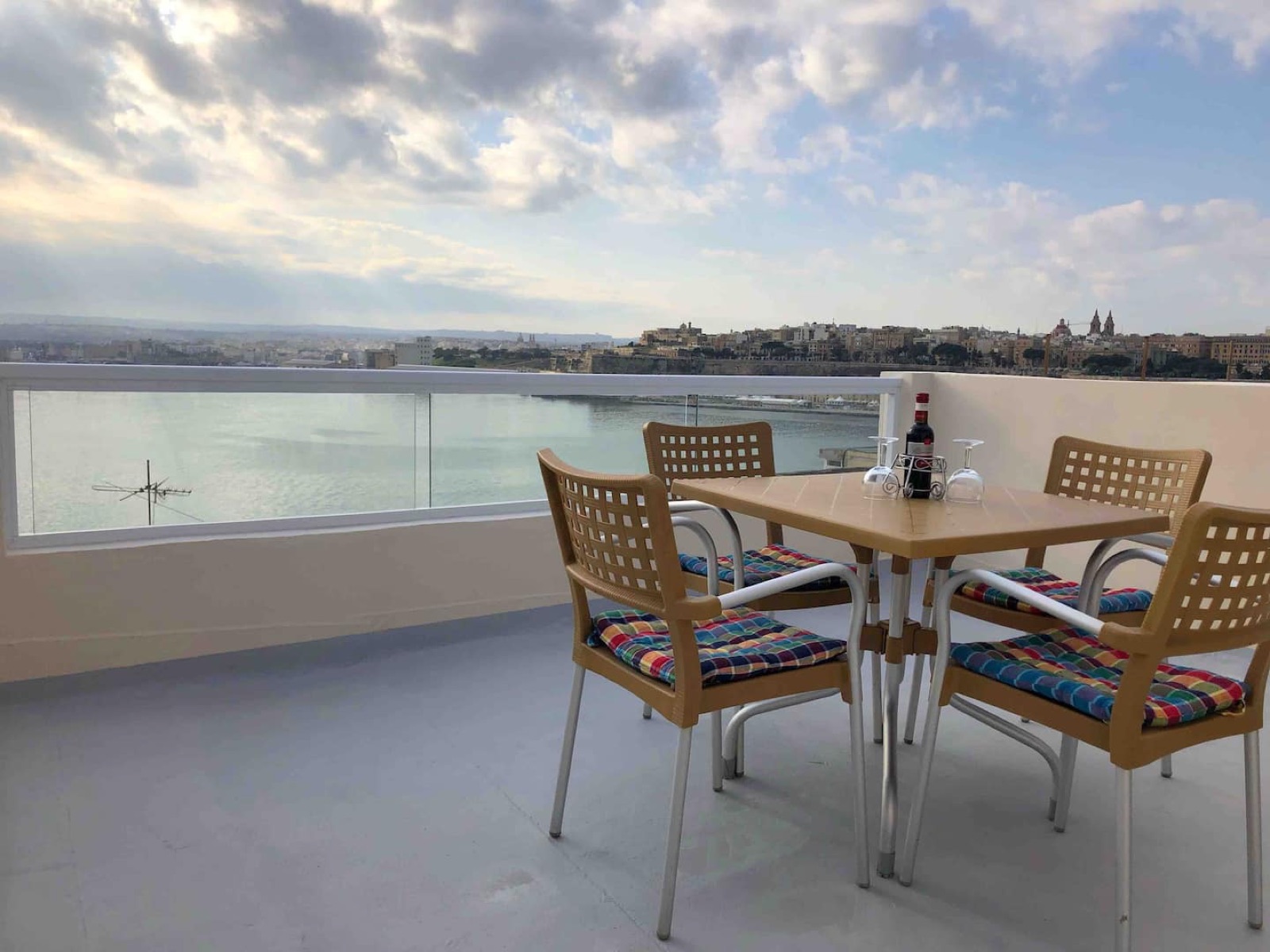
For what it is worth, this itinerary is essentially a description of our own front door. We host guests at Senglea Harbour View, our traditional Maltese townhouse in Senglea — three bedrooms over three floors — two doubles and a twin room — with proper old-house stairs and no lift, two and a half bathrooms, a full kitchen and washing machine for longer stays, and a roof terrace looking straight across the Grand Harbour to Valletta. Self check-in, free street parking nearby if you do bring a car, and the Valletta ferry a 15-minute walk away. It suits couples travelling together and families of up to six who want to do Malta the way this page describes: out all day, home to the harbour every evening.
However you do it, and wherever you sleep — base yourself once, let the ferries do the work, and give the harbour at least one slow day. That is Malta done properly.
Frequently asked questions
Is 3 days in Malta enough?
Yes — three days gives you Valletta, the Three Cities and Mdina comfortably, which covers the historic heart of the island. Malta is small enough that you never waste much time travelling, so a long weekend feels genuinely complete rather than rushed. If you can stretch to four or five days, you gain Gozo, the beaches, or simply a slower pace.
How many days do you need for a Malta itinerary?
Four to five days is the sweet spot. Three days covers Valletta, the Three Cities and Mdina; a fourth day adds Gozo or the northern beaches; a fifth lets you slow down around the Grand Harbour, which is often the day people remember most. A week works well too if you prefer a relaxed pace with more swimming.
Is Malta good for a city break?
Very — it is one of the few places where a capital-city break and a Mediterranean island holiday are the same trip. Valletta is a compact UNESCO-listed capital you can walk end to end in twenty minutes, English is an official language, and flight times from the UK are short. Base yourself in one spot on the harbour and everything is a ferry or bus ride away.
Do you need a car for 3 to 5 days in Malta?
No — for this itinerary a car is more hassle than help. The Valletta harbour ferries, the traditional dgħajsa water taxis and the island-wide bus network cover everything in this plan, and parking in the historic towns is difficult. Buses can be slow at peak times, so build in slack, but for a short trip car-free is the easier way to do Malta.
Should I stay in one place in Malta or move around?
Stay in one place. Malta is so small that no day trip is far, and changing accommodation mid-trip just costs you mornings. Pick a base with good ferry and bus connections — the Grand Harbour area (Valletta or the Three Cities opposite) is the natural choice — and day-trip everything else, returning to the same bed each night.